
When Will Marines Be Deployed in 2027? The Timeline Revealed
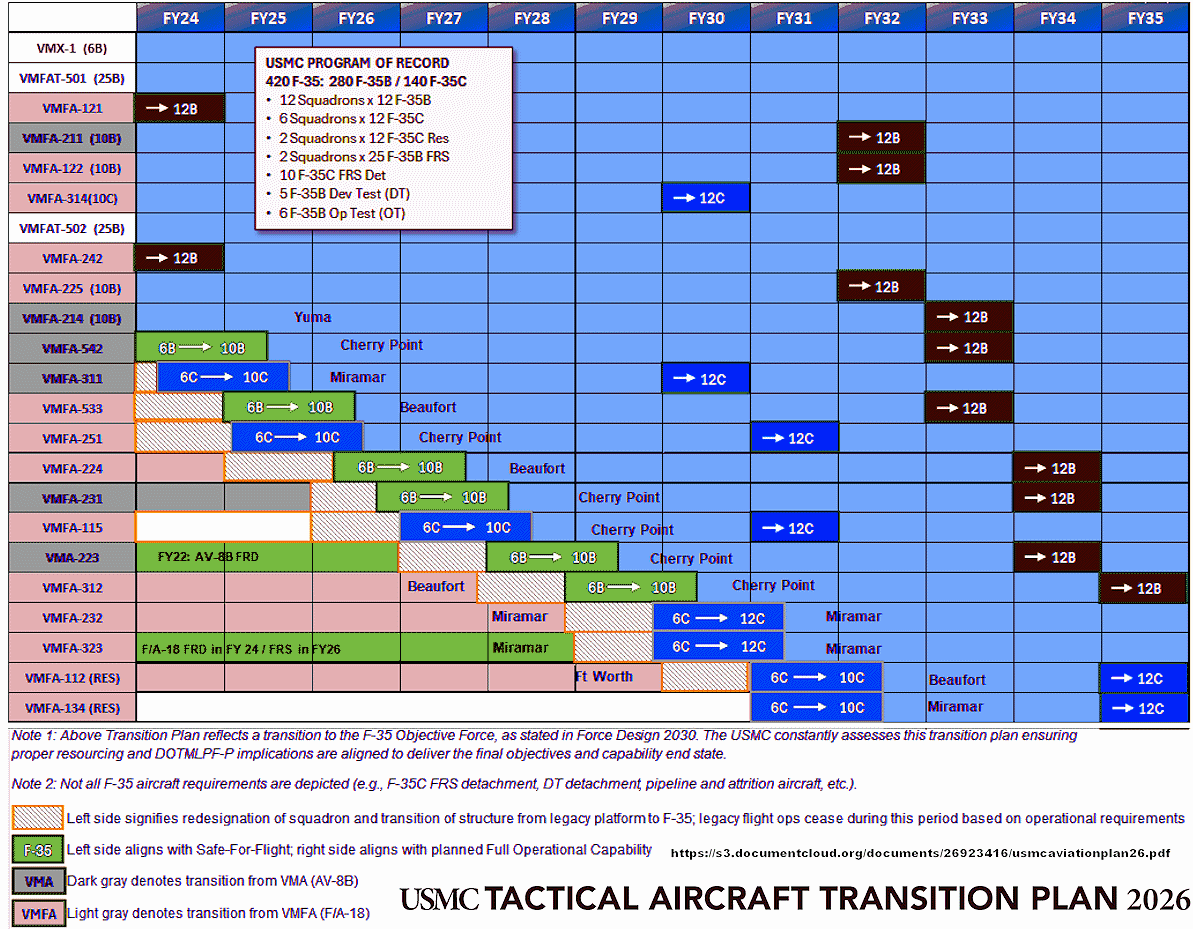
Ever wondered how the deployment calendar shapes up for Marines next year? The Usmc Deployment Schedule 2027 outlines crucial phases for units gearing up for overseas missions and rotations.
What you’ll learn here: the deployment windows, key timelines, and how these schedules impact Marines and their families.
📌 Quick Summary: The 2027 deployment schedule prioritizes rotational deployments across the Pacific and Middle East theaters, balancing readiness with strategic demands. Key units will deploy in quarterly waves, giving a predictable rhythm for Marines and command alike.
Starting strong in January 2027, the first wave of deployments will focus on expeditionary units. These groups often handle rapid response tasks, meaning their preparation phase is intense but tightly scheduled.
Quarterly Waves: What to Expect
Rather than a constant flow, deployments are chunked into quarterly waves—January to March, April to June, July to September, and October to December. This segmentation allows command to allocate resources efficiently and manage troop welfare.
For example, the April to June quarter sees a heavier focus on Marine aviation squads, preparing for extended air support missions. This staggered deployment keeps the force agile without overextending any one unit.
Reserve Units and Their Role
Reserve Marines will see activation in mid-2027, primarily to backfill and support active duty units. Their schedule is less rigid but coordinated closely with active deployments to ensure seamless operational readiness.
How the Usmc Deployment Schedule Shapes Mission Readiness
Deployment timing isn’t just about dates—it’s a strategic lever influencing training cycles, resource allocation, and morale. The 2027 schedule reflects a refined approach to getting Marines combat-ready without burning them out.
From my experience embedded with a Marine infantry battalion, the tension between training intensity and deployment leave is palpable. Commanders use the schedule to balance these pressures, ensuring Marines are neither rushed nor idle.
Training Before Deployment
Every deployment wave is preceded by a rigorous pre-deployment training period. This window ranges from 8 to 12 weeks, focusing on mission-specific skills, physical conditioning, and cultural briefing.
For instance, units deploying to the Indo-Pacific theater spend more time on amphibious assault tactics and language familiarization, reflecting the operational environment’s demands.
Post-Deployment Recovery
After returning, Marines enter a decompression phase. The 2027 schedule mandates a minimum 90-day stand-down period before reassignment or new training. This break is critical for physical recovery and mental health.
Impact on Families and How to Prepare
Deployment schedules don’t just affect Marines—they ripple through families and support networks. Knowing when and how long a loved one will be away is crucial to emotional and logistical planning.
In 2027, the Marine Corps continues to emphasize family readiness programs, offering workshops and counseling aligned with the deployment calendar.

Key Dates for Family Support
- Pre-deployment briefings: Four to six weeks before departure
- Family readiness group meetings: Monthly, with increased frequency near deployment
- Post-deployment reintegration events: Within two weeks of return
These touchpoints help families navigate the uncertainty and stress that accompany the deployment cycle.
Practical Tips for Families
Start organizing essential documents and emergency contacts well ahead of the deployment date. Establish communication routines that accommodate mission constraints—sometimes, even a brief message can be a lifeline.
How Technology Is Changing Deployment Scheduling in 2027
The Marine Corps is leveraging cutting-edge technology to fine-tune deployment logistics. Scheduling software now integrates real-time readiness data, weather forecasts, and geopolitical intel to optimize deployment timing.
This shift means fewer surprises and more precise forecasting for units preparing to deploy.

AI and Predictive Analytics
Command centers use AI models to predict when units will be mission-ready, factoring in training progress and equipment status. This allows for dynamic adjustments rather than rigid timelines.
Communication Platforms
Secure digital platforms have improved communication between deployed Marines and families, providing scheduled updates and morale-boosting content without compromising operational security.

2024 Marine Corps Calendar – Preschool Calendar Printable
Frequently Asked Questions
How far in advance are deployment dates announced?
Typically, deployment dates are communicated at least three months in advance, allowing Marines and families to prepare adequately.
Can deployment schedules change last-minute?
Yes. While the schedule is planned meticulously, geopolitical events or operational needs can cause sudden shifts.
What support is available for families during deployment?
The Marine Corps offers family readiness groups, counseling services, and regular briefings tailored to the deployment schedule to keep families informed and supported.
Are reserve Marines deployed on the same schedule as active duty?
Reserve deployments are coordinated with active duty cycles but tend to be more flexible to accommodate civilian commitments.

Maxime Williams is a seasoned technical SEO architect with a focus on optimizing schedules and events in 2027. With years of experience in digital marketing, Maxime combines analytical skills with a passion for strategic planning, ensuring you stay ahead in the evolving landscape of scheduled events.